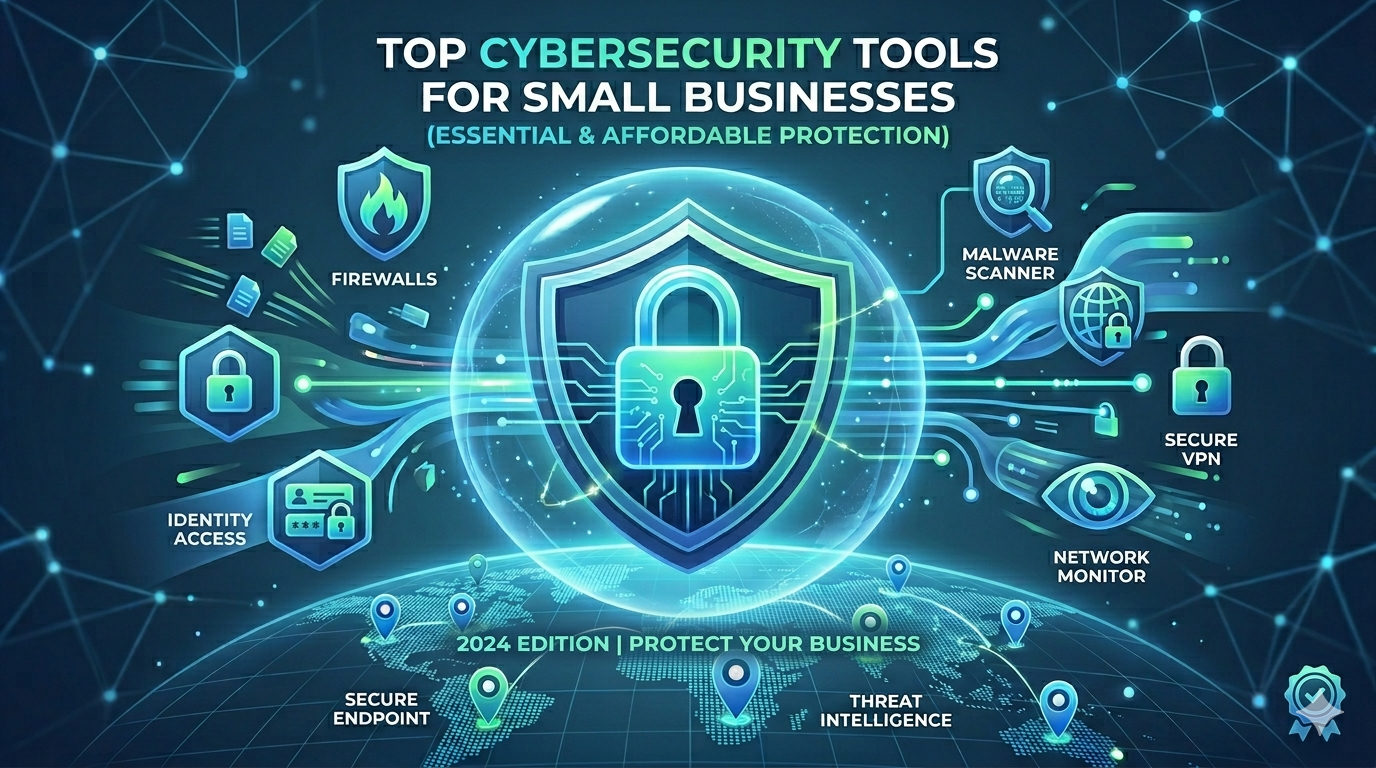
In 2026, cybersecurity is no longer just a concern for large enterprises. Small businesses have become prime targets for cybercriminals due to limited resources and often weaker security systems. From ransomware attacks to phishing scams, the threats are evolving rapidly—and the cost of a breach can be devastating.
That’s why investing in the right cybersecurity tools for small businesses is essential. The good news? You don’t need a massive budget or an in-house IT team to stay protected. Modern tools are more affordable, user-friendly, and powerful than ever.
In this guide, we’ll explore the top cybersecurity tools for small businesses in 2026, along with practical tips to help you build a strong defense strategy.
Why Cybersecurity Matters for Small Businesses
Many small business owners believe they are too small to be targeted—but that’s a dangerous myth.
Key reasons to prioritize cybersecurity:
- 💰 Financial loss from data breaches
- ⚖️ Legal penalties due to data protection violations
- 🏢 Reputation damage
- ⏳ Operational downtime
According to industry reports, over 40% of cyberattacks target small businesses. Without proper protection, even a single attack can shut down operations.
Common Cyber Threats in 2026
Understanding the threats helps you choose the right tools.
1. Phishing Attacks
Fake emails or messages designed to steal sensitive data.
2. Ransomware
Malicious software that locks your files until a ransom is paid.
3. Malware
Viruses, spyware, and trojans that damage systems or steal data.
4. Insider Threats
Employees (intentional or accidental) causing security breaches.
5. Weak Password Attacks
Hackers exploit reused or weak passwords.
Must-Have Cybersecurity Tools for Small Businesses
Let’s break down the essential categories and the best tools in each.
1. Antivirus & Endpoint Protection
Every device connected to your business network must be secured.
Top Tools:
- Bitdefender GravityZone
- Norton Small Business
- Malwarebytes for Business
Key Features:
- Real-time threat detection
- Ransomware protection
- Centralized management dashboard
👉 Why it matters: Protects laptops, desktops, and mobile devices from malware.
2. Firewall Protection
A firewall acts as a barrier between your internal network and external threats.
Top Tools:
- Cisco Secure Firewall
- pfSense (open-source)
- SonicWall
Key Features:
- Traffic filtering
- Intrusion prevention
- VPN integration
👉 Why it matters: Stops unauthorized access before it reaches your systems.
3. VPN (Virtual Private Network)
A VPN secures remote connections—essential for hybrid or remote teams.
Top Tools:
- NordLayer
- Perimeter 81
- ExpressVPN for Business
Key Features:
- Encrypted connections
- Secure remote access
- IP masking
👉 Why it matters: Protects employees working from home or public Wi-Fi.
4. Password Management Tools
Weak passwords are one of the biggest security risks.
Top Tools:
- LastPass
- 1Password
- Dashlane
Key Features:
- Password generation
- Secure vault storage
- Autofill and sharing
👉 Why it matters: Prevents password-related breaches and improves access control.
5. Email Security Solutions
Email is the #1 attack vector for small businesses.
Top Tools:
- Mimecast
- Proofpoint Essentials
- Microsoft Defender for Office 365
Key Features:
- Phishing detection
- Spam filtering
- Attachment scanning
👉 Why it matters: Blocks malicious emails before employees interact with them.
6. Backup & Disaster Recovery Tools
Data loss can destroy a business. Backups are your safety net.
Top Tools:
- Acronis Cyber Protect
- Backblaze Business Backup
- Carbonite
Key Features:
- Automated backups
- Cloud storage
- Quick recovery
👉 Why it matters: Ensures business continuity after cyber incidents.
7. Multi-Factor Authentication (MFA)
Adds an extra layer of security beyond passwords.
Top Tools:
- Duo Security
- Google Authenticator
- Authy
Key Features:
- Two-step verification
- Push notifications
- Biometric support
👉 Why it matters: Even if passwords are stolen, accounts remain protected.
8. Endpoint Detection & Response (EDR)
Advanced threat detection for growing businesses.
Top Tools:
- CrowdStrike Falcon
- SentinelOne
- Sophos Intercept X
Key Features:
- AI threat detection
- Real-time monitoring
- Incident response
👉 Why it matters: Detects and responds to sophisticated attacks instantly.
How to Choose the Right Cybersecurity Tools
Not every business needs every tool. Here’s how to decide:
1. Assess Your Risk Level
- Do you store sensitive customer data?
- Do employees work remotely?
2. Set a Budget
Cybersecurity doesn’t have to be expensive—but it should be strategic.
3. Prioritize Ease of Use
Choose tools with simple dashboards and automation.
4. Look for Integration
Tools should work together seamlessly.
Best Cybersecurity Stack for Small Businesses (2026)
Here’s a simple and effective setup:
- Antivirus: Bitdefender
- Firewall: pfSense
- VPN: NordLayer
- Password Manager: 1Password
- Backup: Acronis
- MFA: Duo Security
👉 This combination provides complete protection without complexity.
Cybersecurity Best Practices
Tools alone are not enough. Follow these best practices:
✅ Train Employees
Human error is the biggest risk.
✅ Update Software Regularly
Patch vulnerabilities quickly.
✅ Use Strong Password Policies
Enforce unique passwords.
✅ Limit Access
Only give employees access to what they need.
✅ Monitor Activity
Track suspicious behavior.
Future Trends in Cybersecurity (2026 and Beyond)
The cybersecurity landscape is evolving fast.
🔮 AI-Powered Security
Automated threat detection using machine learning.
🔐 Zero Trust Architecture
Never trust, always verify.
☁️ Cloud Security Focus
More tools designed for cloud environments.
🧠 Behavioral Analytics
Detect unusual user behavior.
Final Thoughts
Cybersecurity is no longer optional—it’s a business necessity. With the right tools and strategies, small businesses can defend against even the most advanced cyber threats.
Start with the essentials:
- Antivirus
- Firewall
- VPN
- Password manager
- Backup system
Then scale as your business grows.
Investing in cybersecurity today will save you from costly breaches tomorrow.
